Blog · · 4-minute read
The visible problem isn't always the real problem
You get mounted, submitted, crushed. That's what you see. But what you see is rarely what needs fixing.
By Alex Coringa
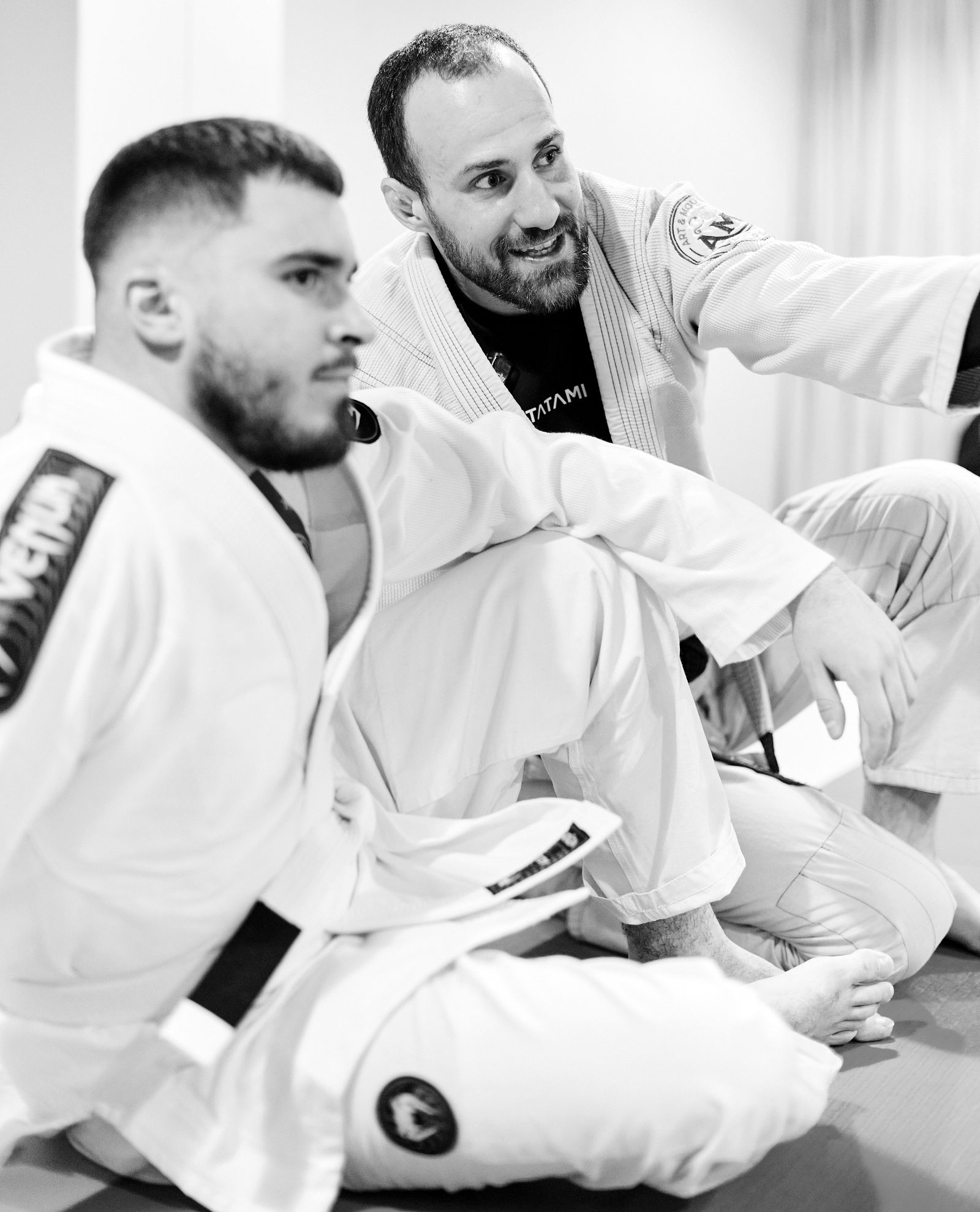
Imagine your knee hurts. You can ice it every evening. It helps. But if the pain comes from the way you land your foot, the knee will hurt again as soon as you start running.
In jiu-jitsu, it's the same. We treat what hurts, not what causes it.
What you see, and what's really going on
You get mounted a lot? The reflex is to work on mount escapes. Useful, of course. But the real question is: how did you get there? Maybe you lose your base in side control. Maybe you never recover guard when space opens up. The mount is the symptom.
You keep getting caught by the same submission? Before the submission, there's often a broken posture, an arm left hanging, a rhythm the other person imposes. The submission comes at the end. The problem started well before.
Why we fixate on the symptom
Because it's what we feel. The moment we lose is the most intense, so the most visible. And because there's always a technique for it. A video, an instructional, a tip in the changing room. It feels like doing something.
But stacking answers to symptoms is like patching a tyre that keeps puncturing in the same spot. At some point, you have to look at the rim.
Learning to trace it back
- Name what you see. “I get mounted.” Simple, factual.
- Ask yourself what happened just before. Then before that. Three steps back is often where the real cause hides.
- Ask a training partner you trust. Not “how do I get out of there?”, but “what do I let you do to get there?”. The answer is often surprising.
The right problem is half the work
When you fix the right problem, several symptoms disappear at once. That's why a single breakthrough can unlock months of plateau.
That's the whole point of my private lessons: before showing you anything, I look for the real problem with you. The rest comes much faster.
Tracing it back also means thinking about the match in chapters: where am I, what am I doing here, and where am I going next.
Want me to look at your game?
In a private lesson, we find out together where things really get stuck.
Book a lessonRead next: Does your guard always get passed on the same side? The problem starts earlier. →