Blog · · 4-minute read
Does your guard always get passed on the same side? The problem starts earlier.
If your guard always falls in the same place, it's no accident. And it probably isn't decided at the moment of the pass.
By Alex Coringa
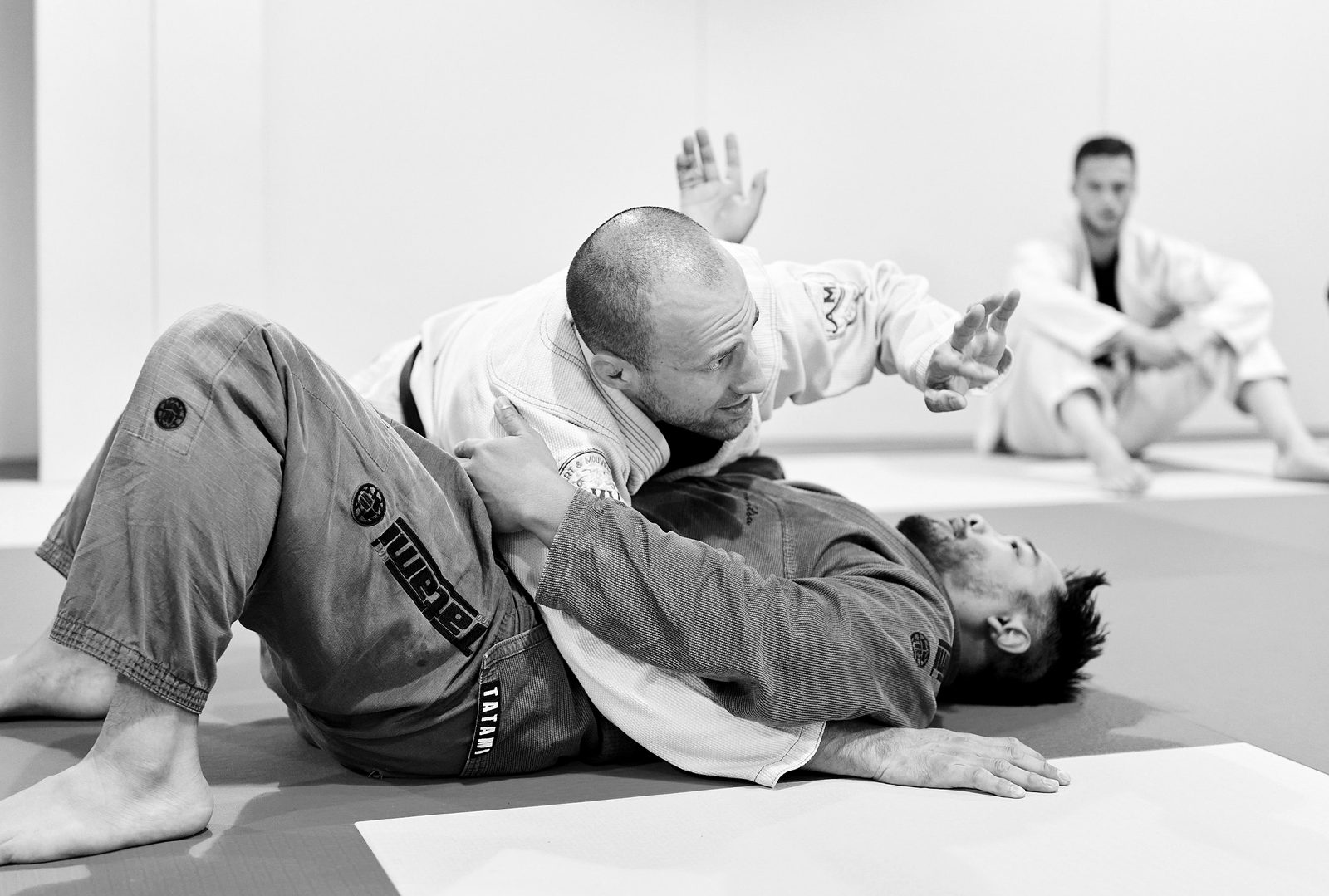
You know that moment. Your partner stands up, controls your legs, and you feel it's going to pass. Again. On the same side as last week, and the week before.
So you do what everyone does: you look for a technique to block that pass. A guard retention move, one more grip, a better-placed frame. Sometimes it works for a few days. Then it starts again.
The pass is only the end of the story
When a guard always falls in the same place, the pass is almost never the real problem. It's the last move of a story that started earlier: two, three, sometimes five actions before.
A hip that settles a little too flat. A foot that stays put when the other person changes angle. A hand that lets go of a grip to look for another. Taken one by one, these details seem like nothing. Added together, they always open the same door.
And because your game has its habits, your partner ends up knowing exactly where to push. They don't pass your guard thanks to some incredible technique. They pass because you leave them the same path, every time.
Why you can't see it yourself
During a roll, your attention is where it burns: the moment you lose. That's normal. It's also why you always correct the last move, and never the ones that set it up.
Adding one more technique doesn't change that. You already have enough techniques. What you're missing is seeing where your game closes up.
What you can do this week
- Film two or three rolls. Not to watch yourself win. To find every pass you concede.
- Rewind. For each pass, go back three actions. What happened just before it got difficult?
- Look for what repeats. The same side, the same leg, the same lost grip. What keeps coming back matters more than what impresses.
Often, this simple exercise already changes the way you roll. You start to feel the moment the door opens, before it's wide open.
And if you can't find it?
That's common. You're badly placed to read your own game, even on video. That's exactly what I do in private lessons: I watch how you play, I spot where it all starts, and we work there, not three moves too late.
As long as the guard holds, the match is an exchange: whoever reads the action a beat ahead takes the advantage. That's what I call ping-pong.
Want me to look at your game?
In a private lesson, we start from what you actually do on the mats.
Book a lessonRead next: The visible problem isn't always the real problem →